
Enhance student success, confidence, and career readiness with a student mentoring system.
Students today face a maze of challenges, from mastering difficult coursework to charting their career paths. It can often feel overwhelming.
So, how can students find the direction and support they need to succeed?
Structured student mentorship programs within academic institutions offer the perfect solution.
By connecting students with experienced mentors, colleges and universities provide essential academic support, valuable career insights, and professional guidance.
These programs empower students to build confidence, achieve academic success, and prepare for future career opportunities.
Student mentorship programs are designed to provide students with the guidance and support they need to navigate their academic journey and future careers.
Mentors act as trusted advisors, sharing their expertise and experience to help students make better decisions, develop critical skills, and build confidence.
Through these connections, students gain access to:
Mentorship is vital in helping students define their career goals and understand how to navigate their chosen fields.
Career mentoring for students is an integral part of a mentorship program, providing students with the tools they need to succeed professionally.
Mentors can guide students through the nuances of specific industries, explain the different roles within a profession, and offer invaluable insights into what it takes to thrive in the workplace.
They can help students identify the skills they need to develop and understand the trends in the job market that will shape their careers.
In addition, mentors can provide advice on managing the transition from academic life to the workforce. They may offer tips on how to prepare for interviews, build a strong resume, and network effectively within their industry.
These conversations and insights help students gain clarity about their career paths, improve their employability, and give them the confidence to pursue their aspirations.
Beyond career guidance, university student success mentorship is key in helping students overcome academic challenges.
Mentors can offer academic support by helping students navigate the complexities of their coursework. Whether students struggle with understanding complex concepts or managing their time effectively, mentors can provide tailored advice to suit each student’s needs.
For example, mentors might recommend specific study techniques or guide students through assignments and research projects. They may also help students find resources like textbooks, research papers, or workshops that can enhance their academic performance.
The one-on-one nature of mentorship makes this kind of academic support highly personalized, which is crucial for students who may need extra help or direction.
Besides improving academic performance, mentors can foster a growth mindset in students. By emphasizing the importance of perseverance, critical thinking, and resilience in overcoming challenges, mentors help students build academic self-efficacy.
This approach encourages students to tackle challenges with greater confidence and see setbacks as opportunities for learning rather than failure.
Professional development is another key area where mentorship benefits students. Many students may be unsure of how to transition from the academic world to professional environments.
Mentorship provides a unique opportunity for students to learn from those who have already walked the path they are about to embark on. A mentor can offer valuable advice on how to approach workplace dynamics, manage professional relationships, and develop a strong work ethic.
Networking is another essential component of professional success, and mentors play an essential role in expanding students’ networks. Through mentorship, students can gain access to their mentors’ professional circles, be introduced to industry professionals, and discover internship opportunities.
These networking opportunities can be invaluable when students start looking for jobs after graduation. Having a mentor who vouches for them and opens doors to professional connections can significantly boost their chances of securing internships and employment.
Mentorship programs that are well-organized and integrated into the academic structure offer several benefits. Structured mentorship programs provide students with a clear roadmap, a strong support system, and the tools they need to succeed.
Having a mentor boosts student confidence by providing personalized guidance. Knowing that they have someone to turn to for advice can reduce anxiety and help students tackle challenges with a clear mind.
When students receive feedback and encouragement from their mentors, it strengthens their belief in their own capabilities and helps them build resilience in the face of setbacks.
Confidence is particularly crucial when students are navigating difficult situations, whether academic or personal. Mentors can offer advice on how to stay motivated, develop perseverance, and stay positive during challenging times.
As students feel more confident in their abilities, they are more likely to engage actively in their academic and career pursuits, making the most of their education.
Students who feel supported are more likely to stay enrolled and complete their degrees.
When students know that someone is looking out for them and offering advice, they are more likely to feel a sense of responsibility toward their academic goals.
Mentorship also provides a layer of emotional and psychological support. Students who face personal or academic struggles are often more willing to reach out for help when they have a trusted mentor.
This reduces feelings of isolation and frustration, helping students persist through challenging times. As a result, student mentorship programs contribute to higher graduation rates by helping students stay on track and complete their degrees with confidence.
University student success mentorship allows students to engage in one-on-one conversations that are tailored to their individual needs and goals.
This approach ensures that each student receives the attention and resources they require to thrive academically and professionally. Unlike a traditional classroom setting, where students receive the same instruction regardless of their personal circumstances, mentorship allows for a customized learning experience.
A mentor can assess a student’s strengths and weaknesses and provide targeted guidance. This personalized attention enables students to improve specific areas of their academic or professional development, making the learning process more effective.
Students also have the opportunity to ask questions in a comfortable, non-judgmental space, which can enhance their understanding of challenging subjects.
Career mentoring for students ensures that they not only understand their field but are also prepared for the realities of the job market.
Mentors can guide students through resume building, interview preparation, and help them gain practical insights into industry trends and expectations. This hands-on guidance ensures that students are not just academically prepared, but also ready to step into the workforce with the skills and knowledge required to succeed.
Besides offering career advice, mentors help students develop the soft skills needed for success in the workplace. These skills, including communication, problem-solving, leadership, and teamwork, are essential for career advancement.
By working with mentors, students gain a competitive edge that sets them up for long-term success in their careers.
While the benefits of mentorship are clear, academic institutions often face challenges when it comes to scaling and managing these programs.
Managing a large cohort of students and mentors can quickly become overwhelming, especially without the right tools in place. This is where technology comes in.
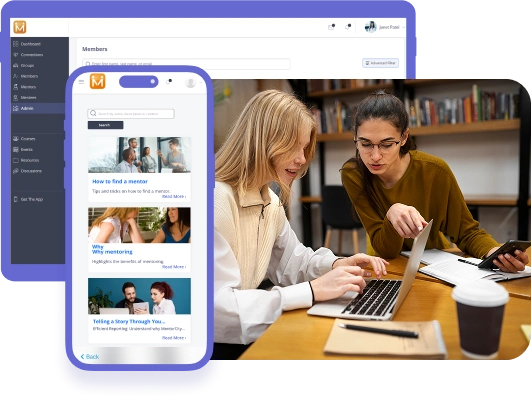
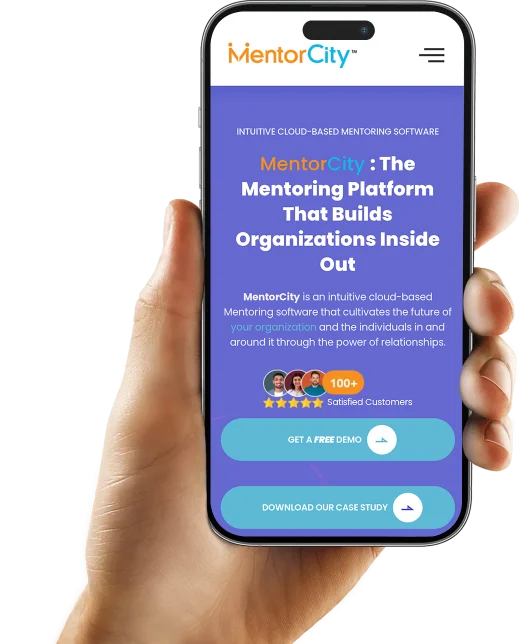
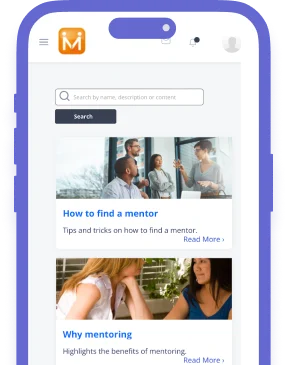
One student mentorship platform that has revolutionized student mentorship programs is MentorCity. MentorCity offers innovative student mentoring software designed to help educational institutions manage and scale their student mentorship initiatives with ease. This user-friendly platform allows colleges and universities to match students with suitable mentors, track progress, and provide ongoing support, all in one place.
Here’s how MentorCity’s student mentoring platform can enhance your university’s student mentorship program:
MentorCity's student mentorship platform uses algorithms to match students with mentors who have the right skills, experiences, and expertise. These university and college mentorship networks help ensure that each student receives tailored guidance, and mentors are connected with students who share similar goals.
By automating the matching process, MentorCity’s student mentoring system eliminates the time-consuming task of manually pairing mentors and mentees. This feature is particularly useful for large institutions with thousands of students, making it easier to match them with the right mentor quickly and efficiently.
By automating the matching process, MentorCity eliminates the time-consuming task of manually pairing mentors and mentees. This feature is particularly useful for large institutions with thousands of students, making it easier to match them with the right mentor quickly and efficiently.
With built-in tools for tracking mentoring relationships, institutions can monitor the progress of both students and mentors, ensuring that they remain on track to meet their goals.
The platform provides real-time data that allows institutions to assess the effectiveness of their mentorship programs. Whether it's tracking the number of meetings, the goals achieved, or the areas where students need additional support, MentorCity’s student mentoring software for higher education provides all the data needed to make informed decisions.
The student mentorship platform generates insightful reports that can be used to evaluate the program's success and identify areas for improvement. This feature helps institutions ensure that their mentorship initiatives are continually evolving and improving, ensuring that they provide the best possible support to their students.
MentorCity allows mentors and mentees to communicate securely and privately through the platform, making it easy for them to share advice, ask questions, and receive feedback, regardless of location.
The student mentorship platform's communication tools allow mentors and mentees to engage in regular, meaningful conversations that are essential for building a strong mentoring relationship.
In addition to private messaging, MentorCity provides tools for setting meeting schedules, sharing resources, and collaborating on projects. This seamless communication helps to maintain engagement and ensure that mentorship relationships remain active and productive.
Whether your institution is a small college or a large university, MentorCity's student mentorship platform is designed to scale. It can handle a growing number of participants while maintaining the quality of mentoring relationships. The platform can be easily adapted to meet the specific needs of any institution, from small liberal arts colleges to large universities.
MentorCity's student mentoring software also facilitates career mentoring for students, helping them prepare for the workforce by connecting them with professionals who can guide them on resume building, networking, and other essential career skills.
This feature is crucial for students who are preparing to enter competitive job markets, as it provides them with the tools and guidance they need to succeed.
If you’re interested in transforming your student mentorship program, MentorCity offers a range of tools and features to make implementation simple and effective.
By implementing a structured mentorship program, academic institutions can provide students with the support they need to succeed academically, build their professional networks, and prepare for future careers.
With the help of platforms like MentorCity, colleges and universities can easily manage and scale their mentorship initiatives, ensuring that every student receives the guidance they deserve.
Ultimately, mentorship programs foster a culture of success, confidence, and career readiness, laying the foundation for students to achieve their fullest potential.
Contact MentorCity for more information.
100+
Satisfied Customers

4.7 out of 5 in customer reviews
from Capterra, GetApp
Book a Demo Today.
Yes, MentorCity’s student mentoring software can be set up so mentees can request mentors based on language, location, gender, and mentoring topic or interest, helping schools and youth programs create better-fitting matches. MentorCity lets administrators define custom profile fields that capture attributes important to students, such as preferred mentor language for better communication, geographic region for local support, gender preferences for comfort and cultural fit, and areas of interest like STEM, career pathways, college readiness, or personal development. Students can then use these filters when browsing mentor profiles or submitting mentor requests, empowering them to connect with mentors who match their individual needs and goals. Program managers can also incorporate these attributes into automated matching rules so recommended mentors align with both student preferences and program objectives. This flexibility makes MentorCity an effective student mentoring platform for personalized, inclusive mentoring experiences that support academic success, career planning, and personal growth.
MentorCity’s student mentoring software protects personal data using industry-standard privacy and security measures to help schools and programs safeguard sensitive information collected from students and mentors. According to MentorCity’s publicly available Privacy Policy, personal data is stored in a secure data centre in Canada that undergoes regular security audits and is SSAE-16 compliant, providing a strong infrastructure foundation for student programs. Data is encrypted in transit using 256-bit SSL and at rest, and systems are protected with anti-virus software, firewalls, daily backups, and network monitoring, helping prevent unauthorized access.
MentorCity also limits access to personal data: only authorized staff may view information when necessary for technical support, and each organization (such as a school or university) can only access its own mentoring community data. MentorCity will not sell or share personal data, and it uses this information solely to support mentoring matches, communication, and program reporting.students and mentors provide consent when they join a program and can control how much data they share, helping protect privacy in student-focused mentoring.