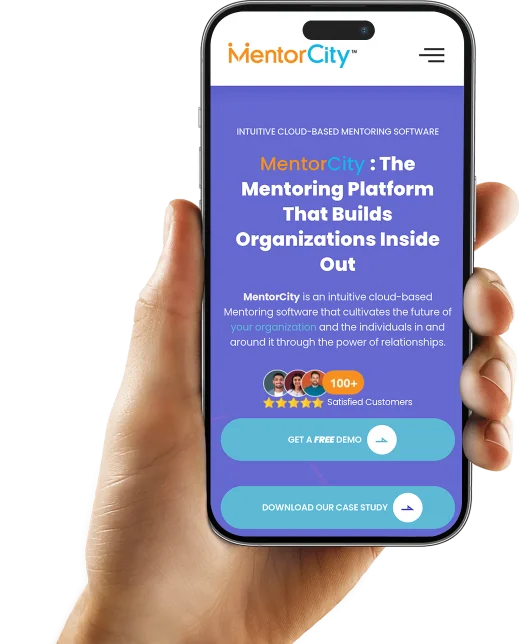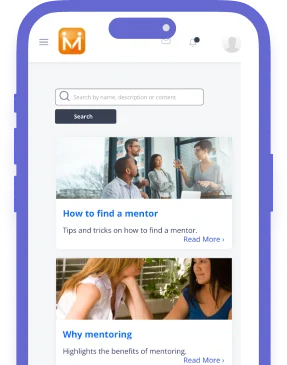












Employee onboarding mentoring software is the part of your onboarding stack that handles people, not paperwork. Your HR system sets up the account and the payroll record; MentorCity makes sure someone who knows the job is sitting with your new hire in week one, week four and week twelve. We match mentors by the criteria you choose, schedule and host the meetings inside the platform, and track goals so nothing depends on memory or a spreadsheet.
Because new hires learn most of their job from people, not from the handbook. A mentor answers the questions nobody writes down: who to ask, how decisions really get made, what good looks like in this team.
Starting a new job can feel like being dropped into a foreign land without a map. However, a well-structured mentorship program can change this narrative significantly. Connecting new hires with experienced mentors allows companies to provide personalized support systems where new employees can ask specific questions about their roles and the company culture. This personalized approach not only helps new hires understand the company’s operations and values but also accelerates their learning curve and skill development.
Mentorship programs foster open communication, allowing new hires to express their concerns and receive informal feedback regularly. This ongoing dialogue is crucial in helping new employees adjust to their new environment and feel more comfortable in their roles. When new hires feel supported and valued, it leads to greater employee engagement and retention. When Microsoft piloted onboarding buddies with 600 new hires, 56% of those who met their buddy at least once in the first 90 days said it helped them get productive quickly, and that rose to 97% among those who met more than eight times (Microsoft pilot, reported by SHRM). Frequency is the lever, and it is exactly what MentorCity is built to keep going: scheduled meetings, reminders, goals and a record of every conversation.
Pair new hires with mentors on the fields that matter to you: role, department, location, language, start date, skills, or interests. Choose admin matching, self-directed matching (new hires can choose their preferred mentor), or both.
Start every relationship with a mentoring agreement that sets the purpose, the length and the meeting rhythm. Setting the length also triggers automated emails, such as pulse surveys and monthly discussion topics, so the relationship keeps moving without HR chasing it.
Put a whole intake of new hires into a cohort with two or three experienced mentors. Groups share discussions, meetings and video sessions, which works well for graduate intakes, seasonal hiring and new teams in a new location.
Implementing an onboarding mentorship program during the onboarding process is more than just a helpful gesture – it’s a strategic move that can significantly enhance employee satisfaction and job performance. New employees who feel valued and welcomed are more likely to be loyal and engaged with the company. This sense of belonging can lead to higher job satisfaction and lower turnover rates.
MentorCity’s employee mentoring software facilitates learning and development, boosting both employee retention and satisfaction. Mentors help new hires navigate challenges, identify opportunities, and develop professionally, making them an integral part of an employee’s career development journey.
One of the most powerful benefits of a mentorship program is its ability to accelerate knowledge transfer. Pairing new hires with experienced mentors ensures that critical information and skills are passed on efficiently. This approach minimizes the need for extensive formal training and allows new hires to quickly gain a strong understanding of company operations. Utilizing MentorCity technology for virtual mentoring can also help maintain connections in remote work settings, bridging the gap for remote or hybrid work environments.
Mentors can help new employees understand the company culture, including its goals, ethics, and informal dynamics. Conveying a positive image of the company and exemplifying its core values helps mentors ensure that new hires feel integrated and aligned with the organization’s mission from the start. This connection helps new employees form social connections with peers and superiors, fostering a sense of belonging for a new employee.
Clarity of expectations is crucial for increasing employee productivity and career growth. MentorCity can help new hires gain a clear understanding of their roles and responsibilities, which boosts job satisfaction and performance. Discussing career aspirations and providing actionable plans helps mentors guide new employees in navigating their career paths effectively. These discussions allow new hires to experiment, reflect, and set realistic goals, thereby fostering a deeper understanding of their roles and expectations and promoting personal and professional growth and professional development.
Goal setting is crucial in measuring the success and effectiveness of the program and ensuring that new employees receive the support they need during their transition. Feedback from program participants, including new hires and mentors, gathered through surveys and other methods, ensures that the onboarding mentorship program evolves and remains aligned with organizational objectives.
Step 1 – set up the program: you configure your profile fields (role, department, location, language, start date), your matching rules and your branding with you. Enterprise customers add single sign-on so new hires log in with their work account.
Step 2 – match in week one: the algorithm suggests mentors for each new hire, your admins preview and adjust, or new hires request the mentors they want. Every pair signs a mentoring agreement that sets the goal, the length and how often they will meet.
Step 3 – run the first 90 days: pairs book meetings with calendar sync, meet on built-in video with AI notetaking, message each other, and work through goals, courses and resources you add for orientation. Automated emails keep the cadence going.
Step 4 – see what is working: dashboards show mentoring hours, meetings held and goals achieved; you can filter and export reports and run program evaluation surveys, so you know which pairs are active and which need a nudge.
Facilitate cohort-based learning and support by connecting new hires with groups of mentors. This approach encourages collaboration and collective problem-solving, allowing new employees to benefit from diverse perspectives and shared experiences. Group mentoring sessions can be structured around specific topics or challenges, providing a platform for open dialogue and mutual learning. By engaging with multiple mentors, new hires can gain a broader understanding of the company culture and various roles within the organization.
Allow new hires to learn from colleagues who recently navigated the onboarding process themselves. Peer mentoring creates a relatable and supportive environment, as mentors have firsthand experience with the challenges and concerns faced by new employees. This type of mentoring fosters a sense of camaraderie and encourages open communication, enabling new hires to ask questions and seek advice without hesitation. Peer mentors can also provide practical tips and insights, helping new employees acclimate more quickly and effectively.
Encourage new hires to share fresh perspectives and insights with their mentors. Reverse mentoring flips the traditional mentorship model, allowing junior employees to offer valuable insights into emerging trends, technology, and generational differences. This exchange of knowledge not only empowers new employees but also enriches the mentor’s understanding of current industry dynamics. Reverse mentoring fosters a culture of continuous learning and innovation, as both parties benefit from the diverse perspectives and experiences shared during their interactions.
MentorCity empowers organizations to create meaningful and effective onboarding experiences through mentorship. By leveraging the platform’s intuitive tools, you can streamline the onboarding process, ensure consistency, and build a culture of support and growth. Start improving employee onboarding with MentorCity today and watch your new hires thrive.
100+
Satisfied Customers
4.7 out of 5 in customer reviews
from Capterra, GetApp
Book a Demo Today.
Yes. MentorCity lets your admins create the profile fields that matter to your organization, such as language, location, department, topic or development goal, and new hires can search mentor profiles on those fields and request a match. You can also build the same fields into automated matching rules, so pairs are suggested for you and your admins preview them before they go live.
Many onboarding programs combine the two: admins match every new hire in week one, and new hires can request an additional mentor on a specific topic later.
MentorCity stores data in a secure data centre in Canada, encrypts it in transit with 256-bit SSL and at rest, and protects it with firewalls, security scans, server monitoring and daily backups. Each organization's program runs separately, only authorized staff can access data for support, and employee data is never sold or shared outside the program.
Employees choose which profile details to share. Deletion requests go through your organization and are completed within 30 days. Enterprise customers can add single sign-on and two-factor authentication. Read the MentorCity privacy policy for the full detail.
Yes, MentorCity’s employee mentoring software supports group mentoring formats, including 1-to-many mentoring, where a single mentor can guide multiple employees at the same time. This approach is ideal for companies looking to scale internal mentoring programs for onboarding, leadership growth, diversity and inclusion efforts, or role-specific skill development.
Using MentorCity’s employee mentoring platform, HR teams and program owners can design structured group mentoring cohorts with clear objectives, timelines, and participation expectations, while maintaining full visibility into program activity. Employees can log sessions, track progress, and stay connected through built-in messaging, scheduling, and collaboration tools, helping keep mentoring relationships active and productive.
The platform also includes robust employee mentoring program management features such as engagement analytics, activity tracking, and reporting dashboards that allow organizations to measure outcomes across teams and departments. With flexible setup options and scalable matching workflows, MentorCity’s employee mentoring software makes it easier to expand mentorship opportunities, increase mentor reach, and deliver consistent development experiences across the workforce.
It depends on your size and set-up choices. A program with self-directed or admin matching and no system connections can launch quickly; single sign-on, custom integrations or many matching rules add configuration time. MentorCity's team supports deployment and setup with you and will give you a timeline for your headcount during your demo.
MentorCity supports single sign-on through SAML and OAuth and two-factor authentication, syncs with Google and Microsoft calendars, and connects with Microsoft, Google, Zoom and Azure, with an API for custom work. Single sign-on and custom integrations are part of the Enterprise plan. If you need a connection to a specific HR system, ask us to scope it in your demo. See the MentorCity integrations page.
MentorCity is licensed by the number of active participants, and you can create as many programs as you need under that license. There are two plans, Standard and Enterprise, and both are quoted for your organization. Enterprise adds single sign-on, private branding and custom integrations. See the pricing page, or book a demo for a quote.
Yes. MentorCity supports unlimited programs under one license, so you can run onboarding, leadership development, peer and reverse mentoring side by side, each with its own matching rules, agreements, goals and reports. See leadership development mentoring with MentorCity.
Yes. MentorCity tracks mentoring hours, meetings held and goals achieved for every pair, and your admins can filter, analyze and export reports and send program evaluation surveys. That makes it easy to spot a pair that has stopped meeting in week three and step in.
Yes, to support the people in the relationship, not to replace them. MentorCity includes AI note-taking in video sessions, Lexa, an AI mentor that participants can talk to between meetings, and AI Admin, which gives program administrators an overview of program health and drafts personalized messages that an admin reviews and sends. Matching runs on MentorCity's configurable matching algorithm and the rules your admins set, and people keep the decisions.
Yes. MentorCity has mobile apps for iOS and Android, and the web platform works on any device, so frontline, field and remote hires can message their mentor, join meetings and track goals without a desktop.