


 We are here to help:


 Satisfied Customers

















-
EIT to Licensed Engineer
-
Chapter Programs
-
Cross-Discipline and Cross-Sector Mentoring
-
Women in Engineering
-
Internationally Educated Engineers
-
Consulting Engineering Firms
-
Licensing and Exam Preparation
-
Student Chapters and New Graduates
-
Knowledge Transfer from Senior Engineers
-
Engineering Technologists and Technicians
-
Committee and Technical Council Leadership

EIT to Licensed Engineer
The years between graduation and licensure are when an early-career engineer most needs someone senior who is not their direct supervisor. In the US, most state boards expect about four years of progressive experience verified by a licensed PE. In Ontario, applicants need 48 months of experience, assessed against a set of competencies. A mentor who has been through it can explain what counts as engineering experience, how to describe a project in competency terms, and when to start writing the application. Pairs set goals around those milestones, and their logged meetings give the EIT a record to look back on when the time comes.

Chapter Programs
National societies with regional branches or local chapters can give each one its own program inside a single MentorCity account. A chapter in a city with three large consulting firms might match on sector, while a rural chapter with a dozen members matches on availability and meets by video. Each chapter keeps its own sign-up form, matching rules and reports, and headquarters can see participation across chapters without asking volunteers to send in spreadsheets.

Cross-Discipline and Cross-Sector Mentoring
A structural engineer who wants to move into project management, a utility engineer weighing a move to consulting, a software engineer working in a regulated industry for the first time: each of them needs a mentor from outside their own firm, and often outside their own discipline. Members can match on discipline, sector (consulting, owner or operator, manufacturing, government, academia) and the direction they want to grow, so your association offers a point of view that no single employer can.

Women in Engineering
Women made up 15.4% of licensed engineers in Canada in 2023 and 18.7% of those newly licensed that year, according to Engineers Canada, still short of its goal of 30% of newly licensed engineers being women by 2030. Keeping women in the profession is as hard as bringing them in: a study of 5,300 women engineering graduates led by Nadya Fouad found that close to 40% had left engineering or never entered it. Women in engineering societies and committees use MentorCity to run one-to-one pairs alongside peer circles, and to report participation by program, so the board can see whether the effort reaches the members it was built for.

Internationally Educated Engineers
Engineers who trained abroad bring real experience and often get stuck on local details: which codes and standards apply, how a design review works here, what a reference should say. Ontario's engineering regulator dropped its Canadian experience requirement in 2023, which moves more of these engineers into the licensing process sooner and makes a local mentor more useful, not less. Associations can run a dedicated newcomer track, match on discipline and prior experience, and offer the platform in English or French.

Consulting Engineering Firms
Members of consulting engineering associations are often firm principals who know the technical work and are still learning the business: winning projects through qualifications-based selection, pricing a fee proposal, managing professional liability, hiring a first project engineer. Pair the principal of a five-person firm with one who has grown a practice to fifty, and let them meet by video between client meetings. Mentoring agreements and goals keep the conversation on the business questions they signed up to discuss.

Licensing and Exam Preparation
Exam season drives membership in a lot of engineering societies. Members preparing for the FE exam, the PE exam or a professional practice and ethics exam want a mentor who passed recently and remembers how they studied. Flag mentors by the exams they have passed, open an exam-prep program next to your main one, and use group mentoring to run study circles that meet on a fixed schedule in the weeks before the exam window.

Student Chapters and New Graduates
Student chapters start an engineering association's membership pipeline, and the move from student to full member is where many people drop off. Connect student members with practising engineers before graduation and keep the same pairs going through the first year of work. The student who joined for a line on a resume now has a reason to become a paying member.

Knowledge Transfer from Senior Engineers
Some of the most useful things a senior engineer knows are not written down anywhere: why a standard detail is drawn the way it is, what went wrong on a job twenty years ago, when to trust the drawings and when to check the site first. Pair late-career engineers with mid-career members before that knowledge retires with them, and keep notes, shared files and resources on a platform the association owns, not in a personal inbox that disappears when someone leaves.

Engineering Technologists and Technicians
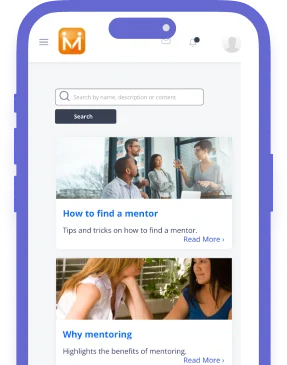
Associations for technologists and technicians have members who work in labs, in plants and on site, and many of them later work toward certification or a degree. Mentoring helps them plan that step with someone who has taken it. Our iOS and Android apps let a member message a mentor from a site trailer, and every exchange still counts in your program reports.

Committee and Technical Council Leadership
The person chairing a technical committee today is likely to be on your board in a few years, and most chairs learned the job by watching someone else do it. Pair new committee members with past chairs so they learn how standards input, conference planning and chapter finances actually work, and your volunteer bench stops depending on the same five people.


100+Satisfied Customers


"The customer service at MentorCity has been exceptional, starting from the support in setting up the platform to assisting with the launch process for our members. The facilitation of webinars and trainings have played a vital role in the successfully launching this platform. Our members love the ease of navigating this platform and having the information stored within the platform."

"Our collaboration with MentorCity has transformed our Professional Mentoring Program. Utilizing the platform, our members now have greater empowerment to connect with mentors whose expertise resonates with their professional development goals and career aspirations. MentorCity's intuitive interface provides flexible mentoring formats, enriching the journeys of our members. MentorCity has been a great tool to elevate the professional growth and reach of our program participants."
Read More.. 
"As the Program Director of a teen mentoring program, I have found MentorCity to be a valuable resource that prioritizes the safety and confidentiality of its users. MentorCity ensured our mentors and mentees were able to connect on a secure mentoring platform, giving parents/caregivers a peace of mind about these interactions. The extra safety precautions also provided us the opportunity to expand our programming to create additional connections with youth and young adults across the US, such as themed discussion threads, affinity groups, and weekly virtual hangouts. Brian helped us continually customize the platform to meet the needs of our growing program. It's evident MentorCity cares about developing a genuine connection with its customers and supporting them every step of the way."
Read More.. 
"I have been impressed with the capabilities and support provided by MentorCity and am happy to once again engage with them in our mentoring program for 2025. One standout feature is the exceptional support team. Whenever we encounter an issue or have a question, their response is quick and effective. They offer comprehensive solutions, and their willingness to go above and beyond to help has been invaluable. The platform also excels in its ability to run detailed reports. The insights gained from these reports are instrumental in making informed decisions and continuously improving our program. Another significant advantage is the flexibility to customize criteria. This has enabled us to set specific parameters and tailor the mentoring experience to meet the diverse needs of our participants. Overall, this platform has enhanced our mentoring program by providing robust tools, insightful analytics, and unparalleled support. I highly recommend it to any organization looking to optimize their mentoring initiatives."
Read More..